macOS
Apple Silicon & Intel · Universal installer
- Audio Unit & VST3
- Desktop beta 0.5.0

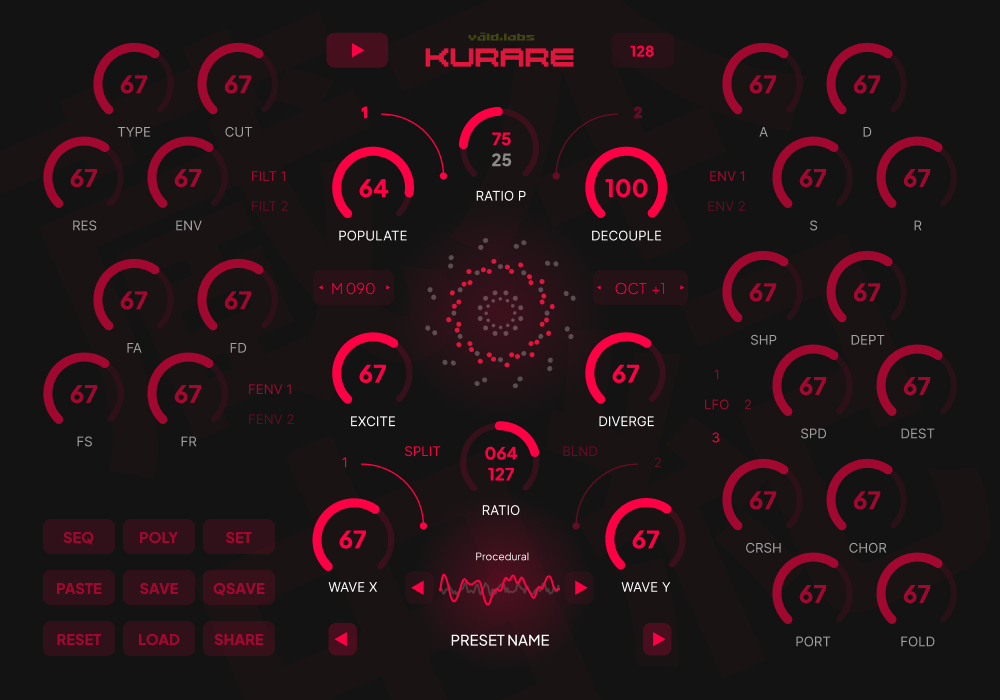
KURARE is a polyphonic swarm synthesizer: two swarms of coupled oscillators per note — red and white, up to 32 each — herdable from a boiling cloud into one fused voice. Built on the Kuramoto model of collective synchronization.
In 1975, physicist Yoshiki Kuramoto wrote down the simplest equation for how a crowd of rhythmic things falls into step — fireflies flashing, crickets chirping, heart cells beating. Each oscillator has its own natural tempo; each nudges toward the group. Weak coupling is chaos. Cross a threshold and the crowd snaps into synchrony.
Between the two lies the interesting zone — clusters forming, breathing, drifting, re-forming. KURARE puts that zone under your fingers. Four axes define a swarm, and they are the four macro knobs. A two-phase oscillator core guarantees the locked choir: phases can march in perfect step while pitches stay fanned into sub-octave and overtone layers.
Coupling freezes; temperature boils. The signature sound lives right at the threshold.
The disc at the centre is not decoration — those particles are the real oscillators of the note you are playing, driven by the engine's own phases. Cloud at low coupling. Lattice when they lock. Shiver when you turn up the heat.
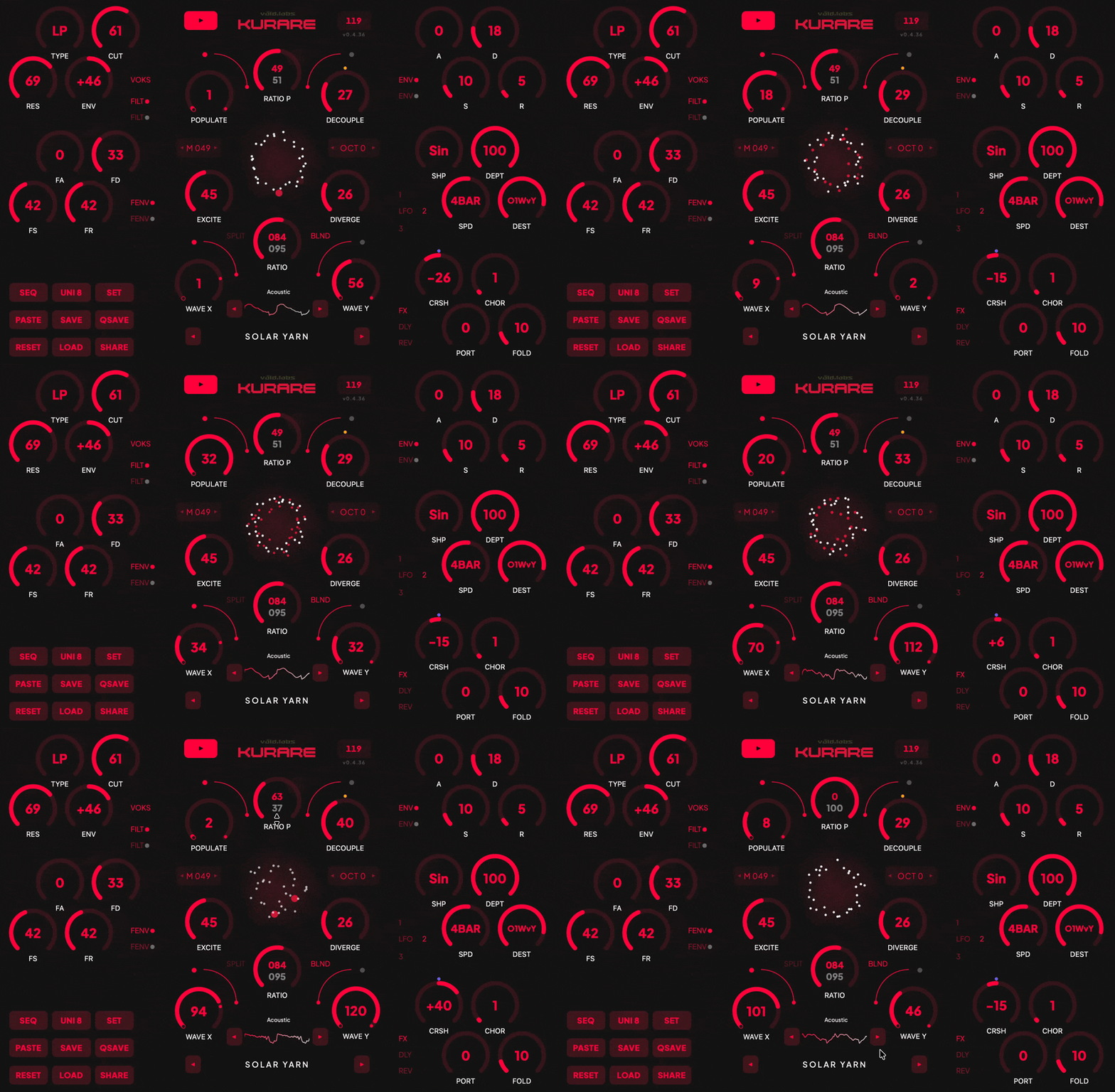
Every oscillator reads a wavetable road: 127 single-cycle frames sorted by spectral brightness, so a sweep is a smooth walk from dark to bright — never a lottery. The red swarm and the white swarm each choose their own road.
WAVE X and WAVE Y are two positions on that road, and RATIO mixes them by interference — the two frames are quarter-phase-shifted before summing, so no mix position can cancel to thin. SPLIT keeps each swarm on its own frame; BLND fuses both swarms into one shared wave.
Under the hood the tables are FFT-built with per-octave mip levels, cached across all sixteen voices, and rebuilt double-buffered at a bounded rate — a fast wave sweep costs one build at a time, never a storm, and always lands bit-identical.
Red reads generated additive wavetables; white reads the classics. Five curated roads — Procedural, Classical, Vox, Acoustic, Digital — with wave interference between two positions on each.
A two-phase oscillator core keeps DIVERGE alive at full coupling: phases entrained completely, pitches fanned by construction. No other swarm architecture guarantees it.
Stateless seeded hashes, pinned math, fixed internal rate. Same patch, same notes, bit-identical audio — and every patch travels as a short share key you can paste anywhere.
Each swarm picks its own: a Morphing Multimode Filter morphing LP → BP → notch → HP, or Voks — LP/BP only, its op-amp pair clipping inside the resonance loop. One swarm can scream while the other stays smooth.
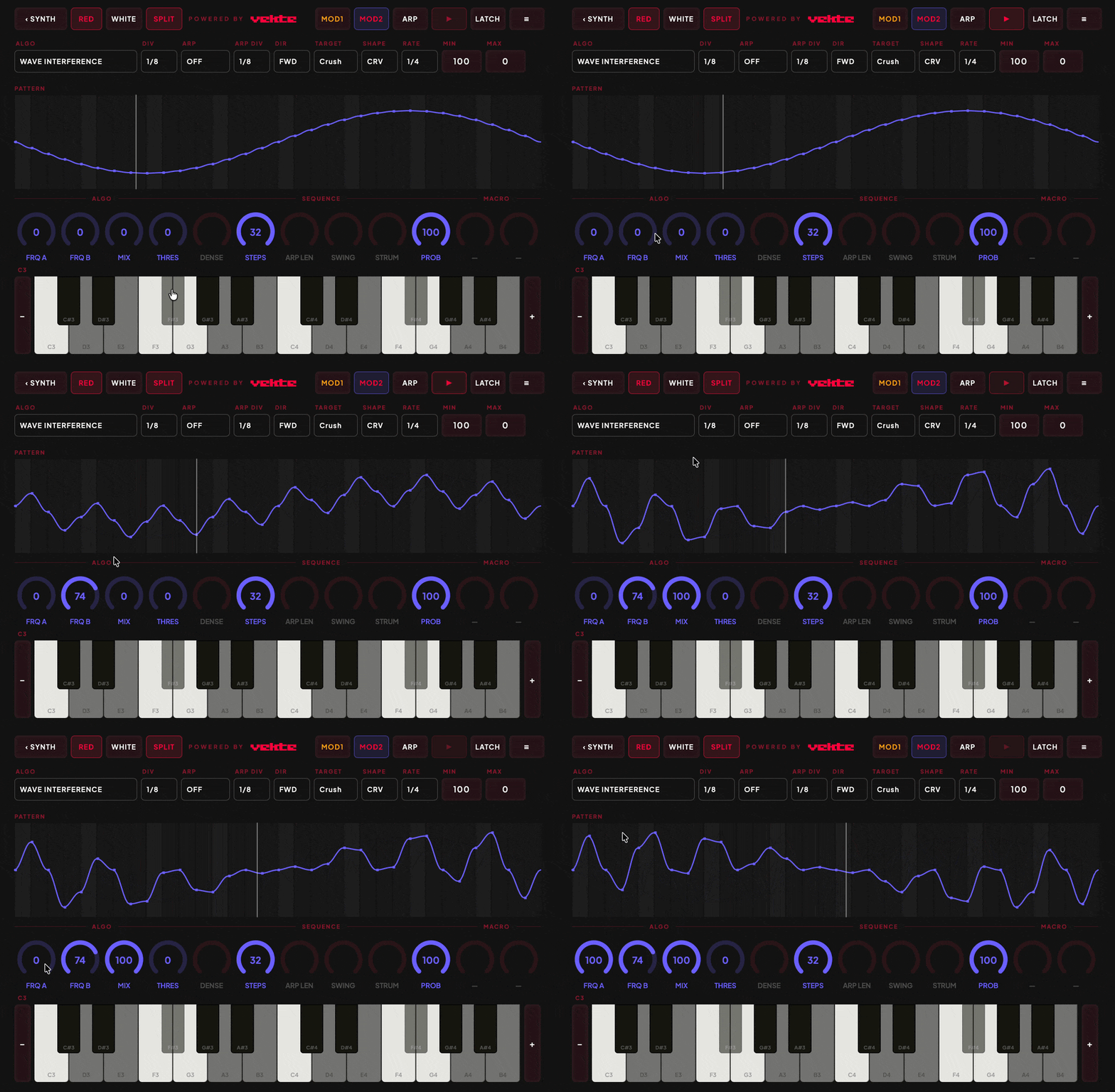
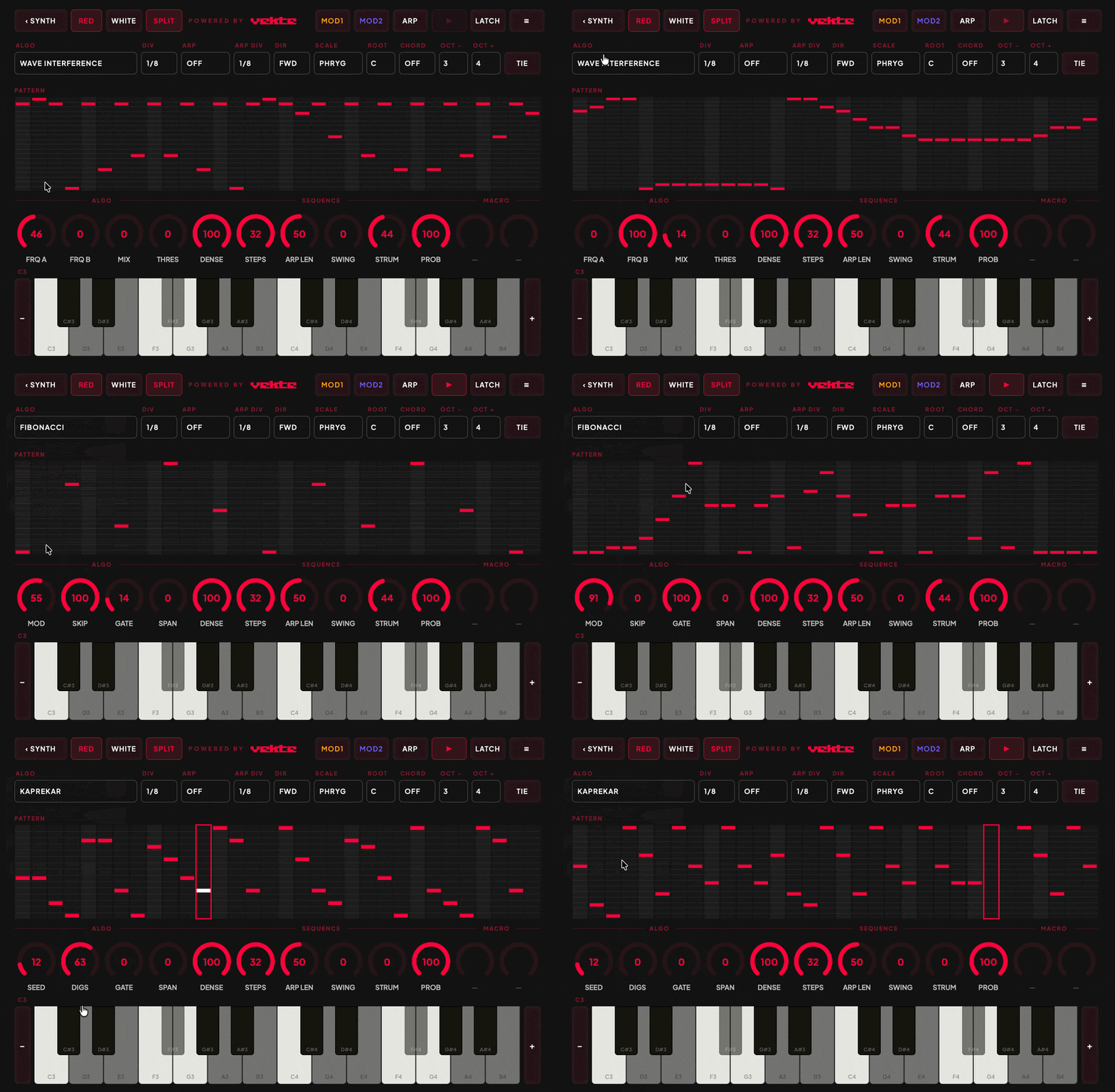
The onboard generative sequencer drives the swarm with seven algorithms — from wave interference to Kaprekar and Fibonacci — plus arp modes, DENSE thinning, swing and humanize.
Three LFOs and two generative modulation lanes reach any parameter; MUTUAL couples the two swarms to each other; octave pills transpose each one whole; MIDI CC learn throughout. Built for hands, not menus.
KURARE · Public beta 0.5.0
Download the current beta for macOS, Windows, or iOS/iPadOS and try it in your own sessions.
Apple Silicon & Intel · Universal installer
64-bit Windows · x64
Apple TestFlight · beta access
KURARE is in public beta ahead of its commercial release — free to download and use while the beta runs. Leave your email for new builds, launch pricing and development drops.
Unsubscribe at any time. Privacy policy.
Trouble with the beta, or found a bug? Write to beta@valdlabs.com.